
Case Study: Langport Life. A Bespoke Town Website and Council CMS, Built for Speed
By Jim Chetwode · 27 August 2026 · 6 min read
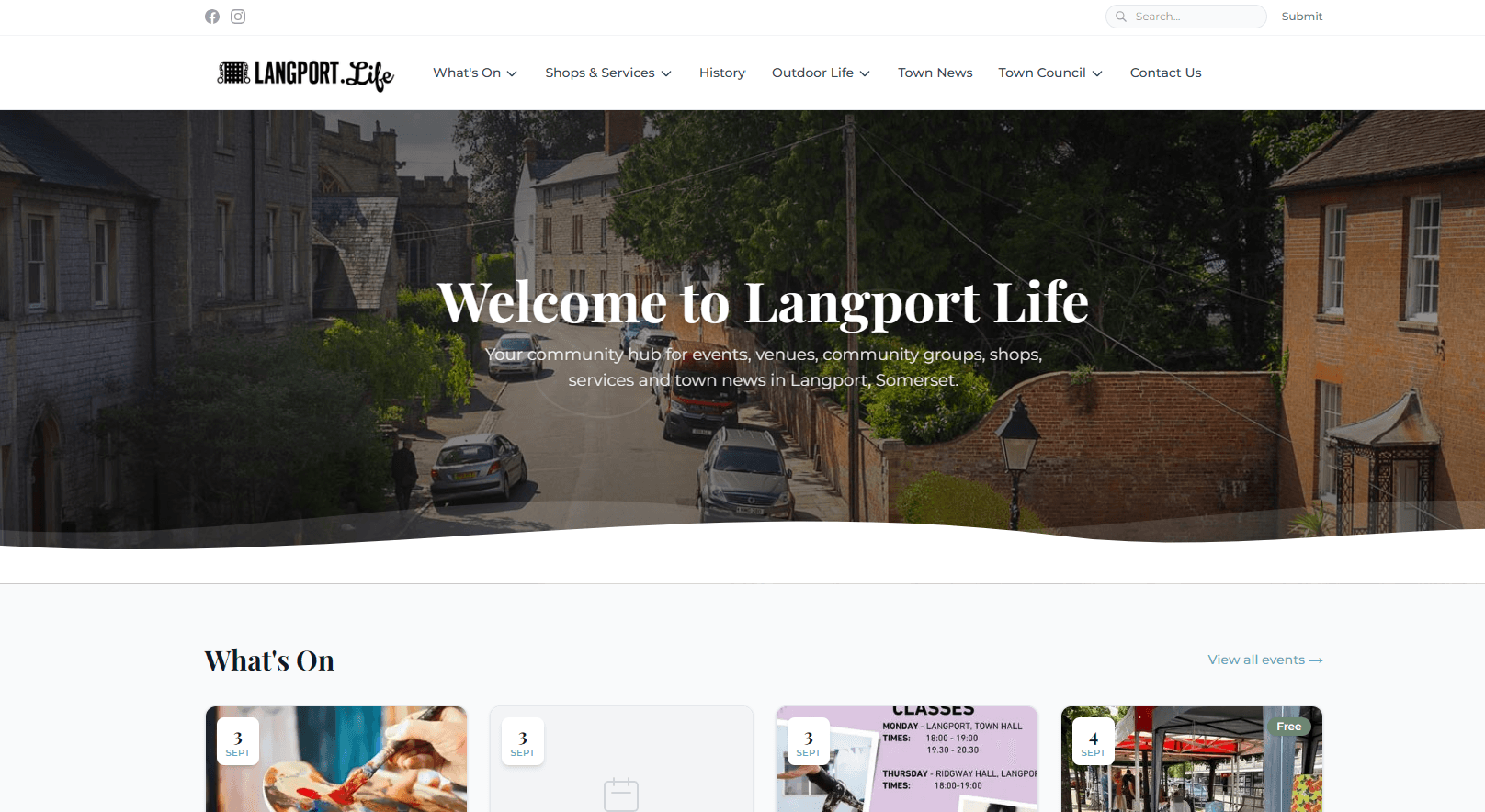
How we rebuilt Langport's town website from WordPress to a fast, headless Next.js and Sanity build, with a bespoke council CMS that keeps a large document library easy to run.
Langport is a small Somerset town with a big story: an active town council, a busy events calendar, local businesses, community groups, and years of council records that residents need to be able to find. Its website, langport.life, had grown over time on WordPress, held together by a directory plug-in, an events plug-in and hundreds of documents added year after year. It contained a huge amount of information, but it had become slow and awkward to run.
Over the last six months we rebuilt the whole thing from the ground up. It went live this week.
The brief
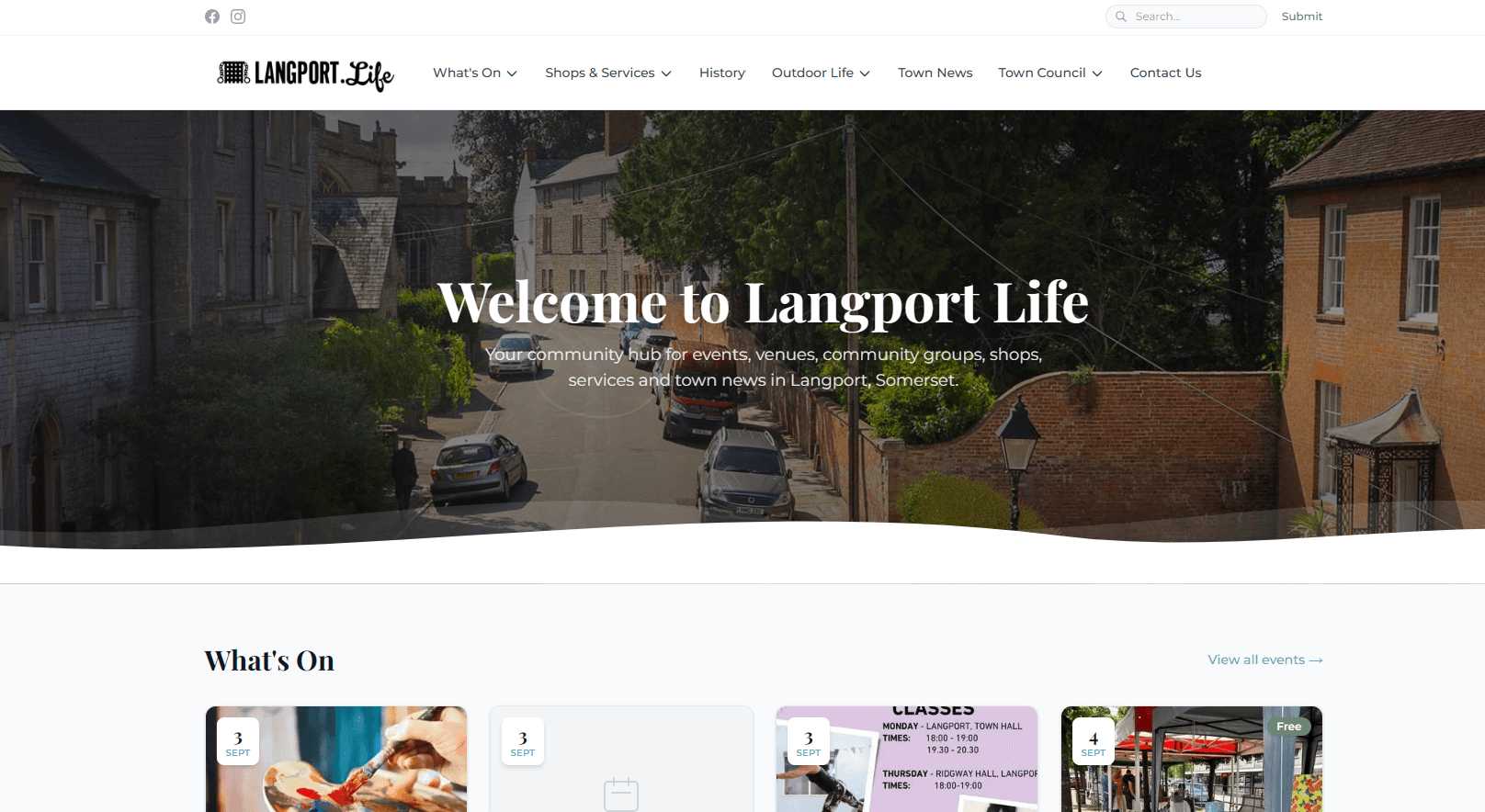
The council needed one place that worked for everyone: residents looking for what is on, businesses wanting to be listed, and the staff who have to keep it all up to date.
That meant four things. It had to be genuinely fast, even though it holds a great deal of content. It had to be easy for council staff to run day to day, without depending on us for every small change. It had to preserve years of search rankings and old links, so nothing already out there on Google or saved in people's bookmarks would break. And it had to give residents a clean, modern way to find events, businesses, news and every council document.
What we built
We rebuilt Langport Life on our modern stack: Next.js and React on the front end, Sanity as the content back end, and Vercel for hosting. Instead of a traditional WordPress database that assembles each page on every visit, the site is built ahead of time and served from a global edge network. That single decision is a big part of why it is so fast.
A bespoke CMS the council can actually run
The heart of the project is the content management system. Rather than hand the council another off-the-shelf platform and a pile of plug-ins, we built them a bespoke editing experience shaped around how a town council actually works.
Everything is organised around the council, not around a generic blog. Staff manage events, venues, business listings, community groups, things to do, transport, news, historic sites and the council's own documents, each with its own simple, guided form.
The council's document library is the part we are most pleased with. Hundreds of agendas, minutes, policies and decisions are organised by committee, Full Council, Finance and Personnel, Tourism and Marketing and the rest, and by type. Staff drag and drop to set the order residents see, with no technical knowledge needed. Papers that should stay internal are simply marked clerks-only and kept off the public site, while everything residents need is one search away.
We also built two custom tools directly into the CMS to save the clerks time:
- A one-click approvals inbox. Public submissions and new items land in a simple queue, and a clerk can approve or reject each one with a single click, or approve a whole batch at once.
- A friendly recurrence picker. For events that repeat, staff choose a pattern in plain language, every Tuesday, the first Monday of the month, instead of wrestling with technical rules.
Letting the town help keep it current
A town website is only as good as the information in it, and keeping it current cannot rest on one person. So residents, businesses and community groups can submit their own events, venues, listings and groups straight from the site.
Every submission lands in the council's inbox for approval, so nothing goes live without a human saying yes. Submitters get a private link to come back and edit their own entry later, and any edit to something already published quietly sends it back for a quick re-check. We added spam traps and sensible limits, and the site even places each submission on a map automatically and flags anything outside the local area.
Moving years of content without breaking the web
A website that has run for years accumulates a lot of links: in Google, in emails, on other people's sites and on paper. Breaking them would have meant losing hard-won search rankings and frustrating residents.
So before we switched over, we crawled the entire old site and built a complete map of redirects. More than 230 old news links alone now point to their new homes, alongside the old business directory, venue pages, event pages and committee sections. We even preserved an old misspelling in one address so a real, existing link would keep working.
The documents were the trickiest part. The old site linked directly to hundreds of PDF files. We moved them all into the new system and built a redirect that recognises an old document link and sends the visitor to the right document on the new site, matched by the original file name. Hundreds of old PDF links keep working, with nobody having to fix them by hand.
Built for speed, even with this much in it
The obvious worry with a site this rich, hundreds of documents, a full events calendar, listings, news and local history, is that it will be slow. It is the opposite.
Because pages are generated ahead of time and served from the edge, images are automatically optimised and correctly sized, and fonts are served from the site itself rather than fetched from elsewhere, the site loads quickly and feels instant to move around. When the council publishes or edits something, only the affected pages rebuild in the background, so content is always current without a slow full rebuild.
The unglamorous essentials, done properly
As with every site we build, the foundations are in place from day one. Every page has a proper title, description and canonical link. Events carry structured data, so they can show up as rich results in Google. The site declares itself as UK English, and security headers and a strict content policy are set. Google Analytics is configured to respect consent, staying switched off until a visitor accepts cookies, in line with UK privacy rules.
Where we are now
The new Langport Life is live, replacing the old WordPress site on the same web address, so every existing link resolves to the right place. The council now has a fast, modern website they can run themselves, and residents have a genuinely useful town hub that will only get better as more of the community adds to it.
Thinking about something similar?
If you run a town or parish council, or any organisation sitting on years of content and a website that has become hard to manage, and you want something fast, modern and genuinely easy to run, we would love to talk.
Tagged: Case Study, News.

Jim Chetwode
Founder, Okapi & Co · Shaftesbury, Dorset
Thirty years in digital marketing, now spent on how businesses get found in Google and cited by AI assistants. Chairman of the Shaftesbury and District Chamber of Commerce, Dorset Ambassador, and the person who runs the AI workshops.