
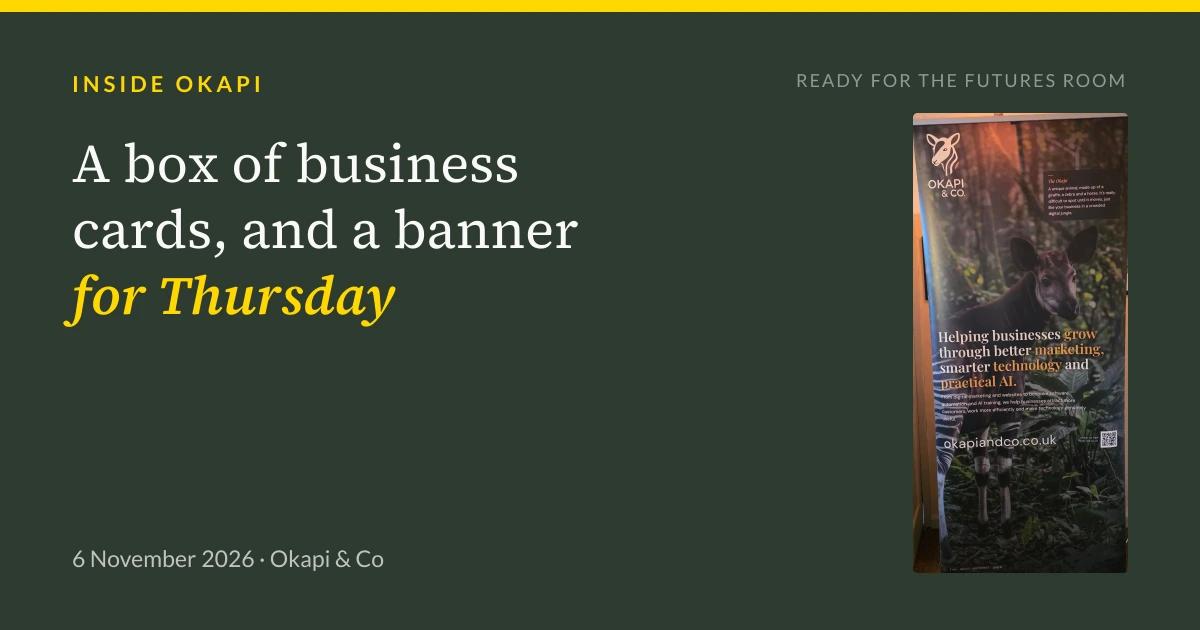
Our first proper merchandise arrived this week. A box of business cards and a pull-up banner, both of them ready for the Hinton Workspace Business Expo on Thursday, where we are sponsoring the Futures Room and Jim is talking about building an AI dashboard.
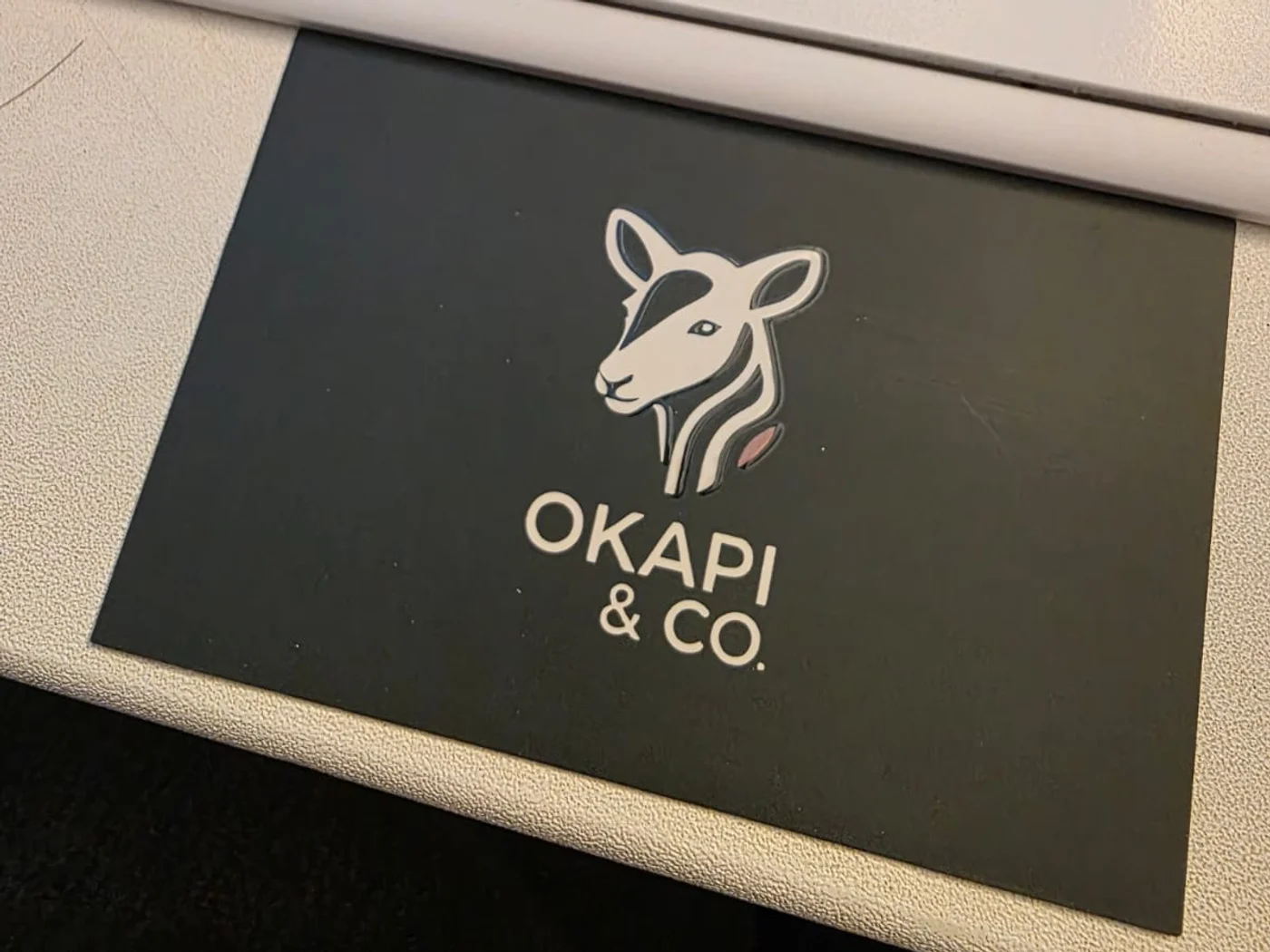
There is a cardboard box on the desk with our name printed on everything inside it. Business cards. Our first proper merchandise, and it has been considerably more exciting than it has any right to be.
It is old school. It is paper. We spend our days on AI search visibility, building dashboards and working out how to get clients cited by ChatGPT, and the thing that made this week was a box of printed card arriving in the post.
Why a box of cards still feels like something
Ordering business cards used to be the first thing you did when you started a business. Before the website, before the logo was properly finished, sometimes before you had entirely worked out what you were selling. You ordered a great pile of them, handed out about four, and found the rest in a drawer three years later with an old phone number on them.
Then everything moved. You start with a domain name and a LinkedIn profile now, and the cards get put off, and put off again, and one day you look up and a good while has gone by.
That is more or less what happened to us. The website has been rebuilt, the work has grown, and only this week did we get round to the thing that used to come first. Since Terri joined the business we have been moving a good deal faster, and the cards were one of several things sitting on a list waiting for somebody to actually order them.
There is something clarifying about it. A card gives you about fifteen words and no second chance. No analytics, no editing it later, no A/B test. You either know what you do or you do not, and the printer does not care either way.
And a banner
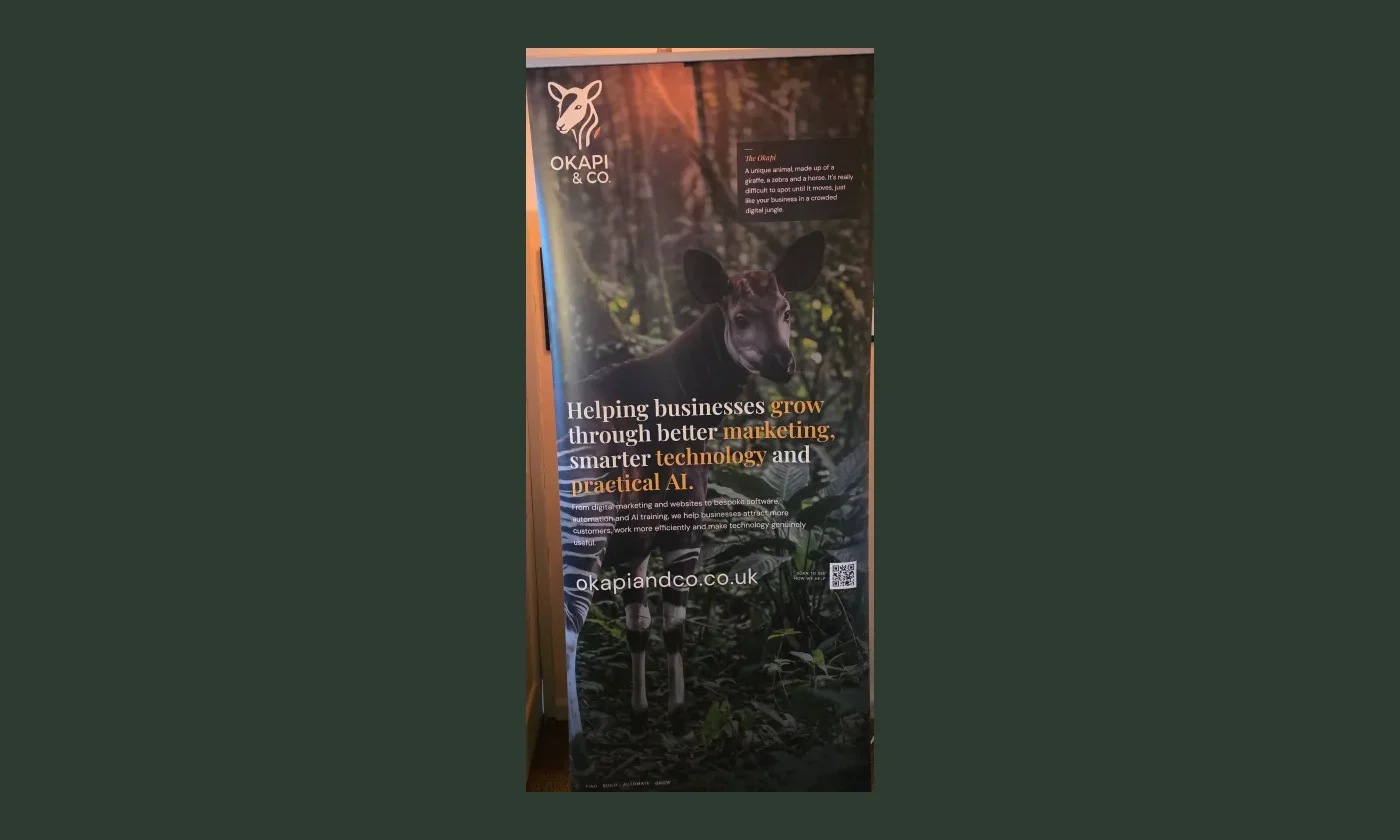
The pull-up banner arrived in the same week, and it carries the only proper explanation of our name that exists anywhere: a unique animal, made up of a giraffe, a zebra and a horse, really difficult to spot until it moves, just like your business in a crowded digital jungle.
People ask about the name a lot. Now there is something to point at.
Both of them are for Thursday
The Hinton Workspace Business Expo is on Thursday 12 November, at Hinton Workspace, The Building Yard, Hinton St Mary, Dorset. Breakfast networking opens at 9.00am and the expo floor runs from 10.00am to 2.00pm.
We are sponsoring the Futures Room, which is the strand given over to where things are going rather than where they are. Jim is speaking in it at 10.25am, on building an AI dashboard: what one actually is, what it takes to put together, and how to tell whether your business would get anything out of having one.
It is a practical talk rather than a visionary one. Most businesses do not need an AI strategy. Quite a few of them would benefit from one screen that tells them what happened yesterday without somebody rebuilding a spreadsheet first. That is the gap worth talking about, and it is the sort of thing we build as bespoke software and teach teams to do themselves in our AI training.
Annabelle Norris of Next Level Business follows at 11.15am, and Steve Paul of Stable Payments at 12.05pm, so the room is worth sitting in for more than twenty minutes.
Come and say hello
If you are going, find us on the expo floor. We will have cards, which after all this is the least we can do with them.
If you cannot make Thursday but the dashboard question is a live one for you, book a visibility call. Twenty minutes, no pitch, and we will tell you straight whether it is worth doing.

Jim Chetwode
Founder, Okapi & Co · Shaftesbury, Dorset
Thirty years in digital marketing, now spent on how businesses get found in Google and cited by AI assistants. Chairman of the Shaftesbury and District Chamber of Commerce, Dorset Ambassador, and the person who runs the AI workshops.