Most people get mediocre results from AI tools not because the technology is bad, but because the prompt is wrong. Here is what a great prompt looks like — and two free tools to help you write one.
Most people blame the AI when they get a bad answer.
In almost every case, the problem is the prompt.
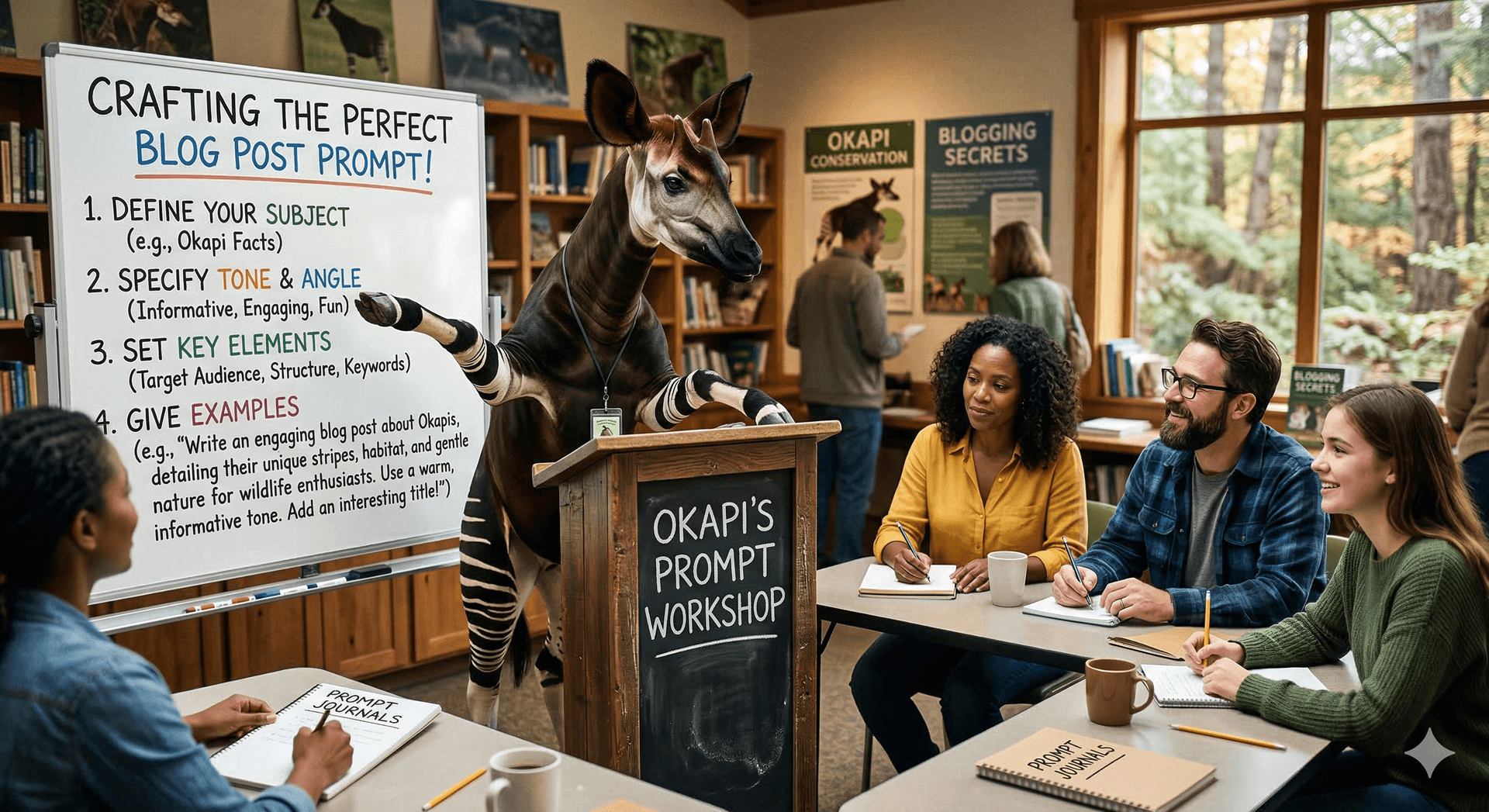
We have been running AI for Business sessions in Dorset for several months now. Business owners come in curious but sceptical. They have tried ChatGPT or Claude, got something vague and a bit generic back, and concluded that AI is overhyped.
Then we show them what happens when you change the prompt. Same question. Completely different result.
The shift is immediate and, for most people, a little surprising.
What is a prompt and why does it matter?
A prompt is the instruction you give an AI tool. It is what you type into ChatGPT, Claude, Gemini, or any other AI assistant before it responds.
The AI does not know who you are, what your business does, who your customers are, or what you want the output to look like. Unless you tell it.
Most people type something short and hope for the best. "Write me a social media post about my plumbing business." The AI obliges. The result is technically a social media post. It is also completely forgettable.
The same prompt with proper context produces something you might actually want to use.
The 8 elements of a great prompt
Through our work with clients and our own AI-powered workflows, we have identified 8 elements that make the difference between a mediocre prompt and a great one.
They cover things like: giving the AI a role to play, providing the right context about your business and audience, specifying the format and length you want, and telling the AI what to avoid.
We have put all 8 into a free guide that you can download from the link below. It takes about 10 minutes to read and will change how you use AI tools immediately.
A free tool that builds the prompt for you
If you would rather not think about the 8 elements yourself, we have also built a Prompt Calculator.
You answer a series of simple questions — what you want, who it is for, what tone you need, what the output should look like — and the calculator assembles a properly structured prompt for you. Copy it. Paste it into any AI tool. Get a better result.
There is also an option at the end to get in touch with us directly if you want help taking things further.
Why we built these as HTML tools
Both the Prompt Calculator and the Prompting Guide are built as HTML files, hosted on Vercel.
We mention this not to be technical, but because it is worth understanding. These tools were built using Claude and VS Code. The entire process took about 20 minutes each.
No PowerPoint. No expensive developer. No weeks of waiting.
This is increasingly how we work at Okapi and Co. When a client needs a calculator, a guide, a quote tool, or an interactive resource, we can build it quickly, host it instantly, and update it without touching a CMS.
If you have ever thought "it would be useful if we had a tool that did X", it is worth having a conversation with us. The barrier to building that tool is much lower than most people realise.
Want to get genuinely useful with AI?
We run focused 1-2 hour AI literacy sessions for business owners and their teams. You will leave knowing how to use AI effectively for your marketing, your content, and your day-to-day operations. No jargon. No fluff. Just practical skills you can use immediately.
Or if you want something built — a custom tool, a prompt library, an interactive resource for your website — get in touch.
📖 Download the Guide to Prompting
Okapi and Co is a digital marketing agency based in Shaftesbury, Dorset. We help businesses get found by the right people, in the right places, using the right channels — including AI.
Internal Linking Suggestions
- Link to AI for Business service page
- Link to contact / book a session page
- Link to Vibe Coding post
- Link to GEO / AI search visibility post
Social Sharing Copy
LinkedIn: Most people get bad results from AI not because the technology is poor, but because the prompt is wrong. We have built two free tools to fix that — and they are also a live example of what we can build for you.
Facebook: 👋 Two free AI tools from us this week — a Prompt Calculator and a Guide to Prompting. Both free, both useful, both built in about 20 minutes using Claude and Vercel. Link in comments.
Tagged: Guide.

Jim Chetwode
Founder, Okapi & Co · Shaftesbury, Dorset
Thirty years in digital marketing, now spent on how businesses get found in Google and cited by AI assistants. Chairman of the Shaftesbury and District Chamber of Commerce, Dorset Ambassador, and the person who runs the AI workshops.